Import/Export
- The following imports of collections and environments are supported:
- Postman 2.1.0 format
- Insomnia v4 or v5 format
- Hoppscotch format
- Bruno YAML files
- OpenAPI v3 JSON or YAML files
- Thunder Client
- The import of .env files is also supported from the Env tab.
How to Import a Collection
- Select the
Collectiontab from the sidebar. - Click the
Menuicon (see image) and selectImportorImport from URL. - Now select a file from Postman, Thunder Client, Insomnia, Bruno (YAML), or OpenAPI.
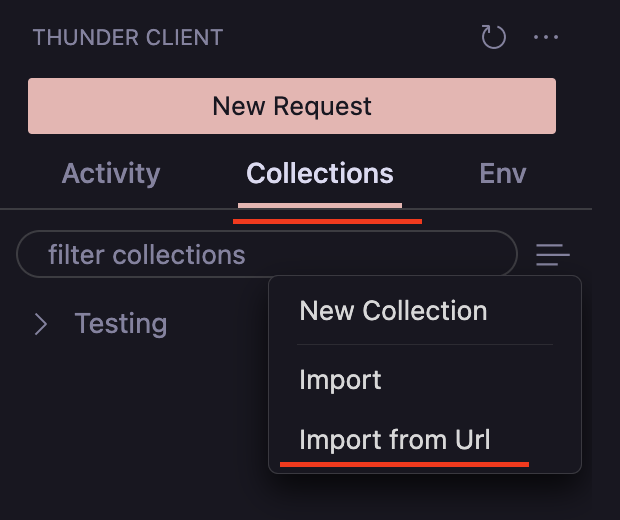
Bulk Import
- You can import multiple collections and environments at once by selecting several files in the Import dialog.
- Bulk import works with all supported formats, including Postman, Insomnia, Hoppscotch, and OpenAPI.
OpenAPI Sync
Use sync to update a collection when your OpenAPI spec changes, without losing the work you added in Thunder Client.
- When you import an OpenAPI file or URL and a collection with the same name already exists, Thunder Client asks whether to sync.
- Choose Yes to update the existing collection with the latest requests and folders from the spec.
- Choose No to import it as a separate new collection.
What is kept when you sync
- Collection and folder settings.
- For requests that match by URL: pre-request scripts, post-request scripts, tests, and auth.
Import cURL
- From the Activity tab menu, select
Import cURL. - Now you can enter
cURL TextorURLin the same input (shortcutCtrl/Cmd + U). - From the Command Palette, select
Thunder Client: Import cURL, which is helpful for testing a request from anywhere. You can also enter cURL text or a URL here.
Export Data
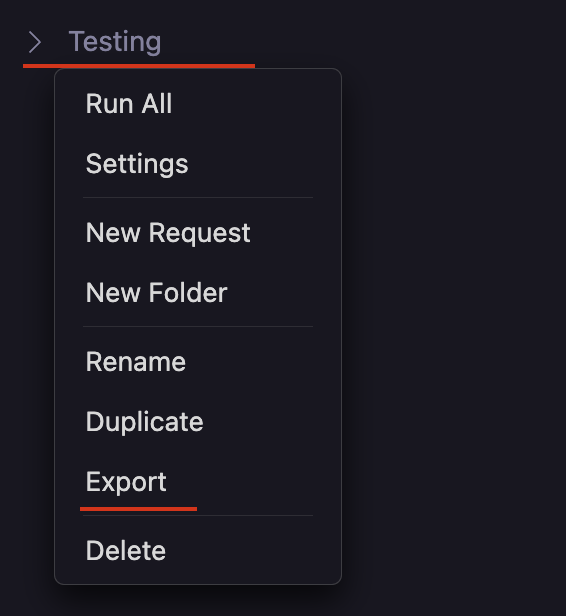
How to Export Data
- Right-click on the collection or environment and select
Export. - You can export in
Thunder Client,Postman, andOpenAPIformats. OpenAPIexport is only available in the paid version.
Default Storage Location
- The details of the data storage location can be found here.
Last updated on